
How to read the OKX liquidation price: drivers, mistakes and pre-order checks
Editorial Note
Last reviewed: 3/19/2026
This page is maintained by the BG Trading - OKX Trading & Rebate Guides editorial team and cross-checked against platform rules, product docs and internal topic pages.
If platform rules change, treat the official documentation as the final source of truth.
The liquidation price is not a decorative number. It shows how close your position is to forced closure, and it shifts with leverage, size and margin mode.
Who this guide is for
- Best for futures users who still do not fully understand liquidation distance
- Leverage alone can hide the true risk
- Position size, margin mode and stop-loss all matter together
Suggested path
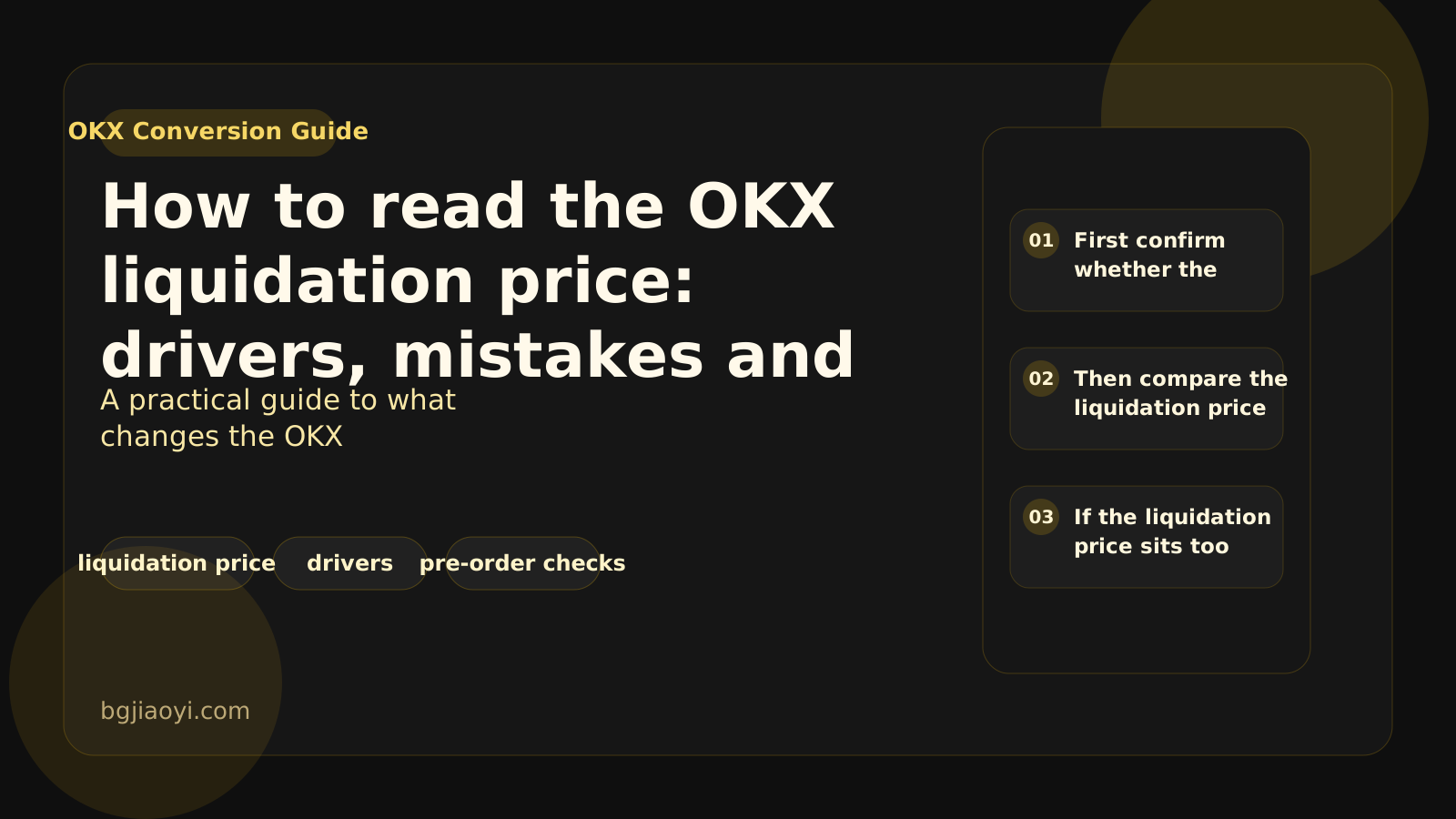
- First confirm whether the position uses isolated or cross margin, what leverage is selected and how large the position will be.
- Then compare the liquidation price with your entry and stop-loss instead of looking only at the headline PnL.
- If the liquidation price sits too close, reduce leverage, shrink size or create a wider safety buffer before entering.
- Before placing the order, factor in stop-loss, fees, funding and extreme volatility together.
Key checks
- liquidation price
- drivers
- pre-order checks
FAQ
Does lower leverage always make the trade safe?
It helps, but oversized positions and no stop-loss can still create dangerous risk.
Will adding margin always solve the problem?
Not always. It may delay risk without fixing a weak trade plan.
Why should I compare liquidation price with stop-loss?
Because stop-loss is your planned exit while liquidation is forced. The gap between them shows your buffer.
Next move
Once you enter OKX, use the live platform page as the final source for fees, eligibility and campaign rules.
Site Role
Site role: carry account-open traffic into trading
This site serves users who already have, or are close to having, an account and now need execution guidance.
- Prioritize fees, fund transfers, spot/futures execution and risk checks.
- Shorten the path from intent to first trade.
- Avoid repeating too much beginner signup material handled elsewhere.